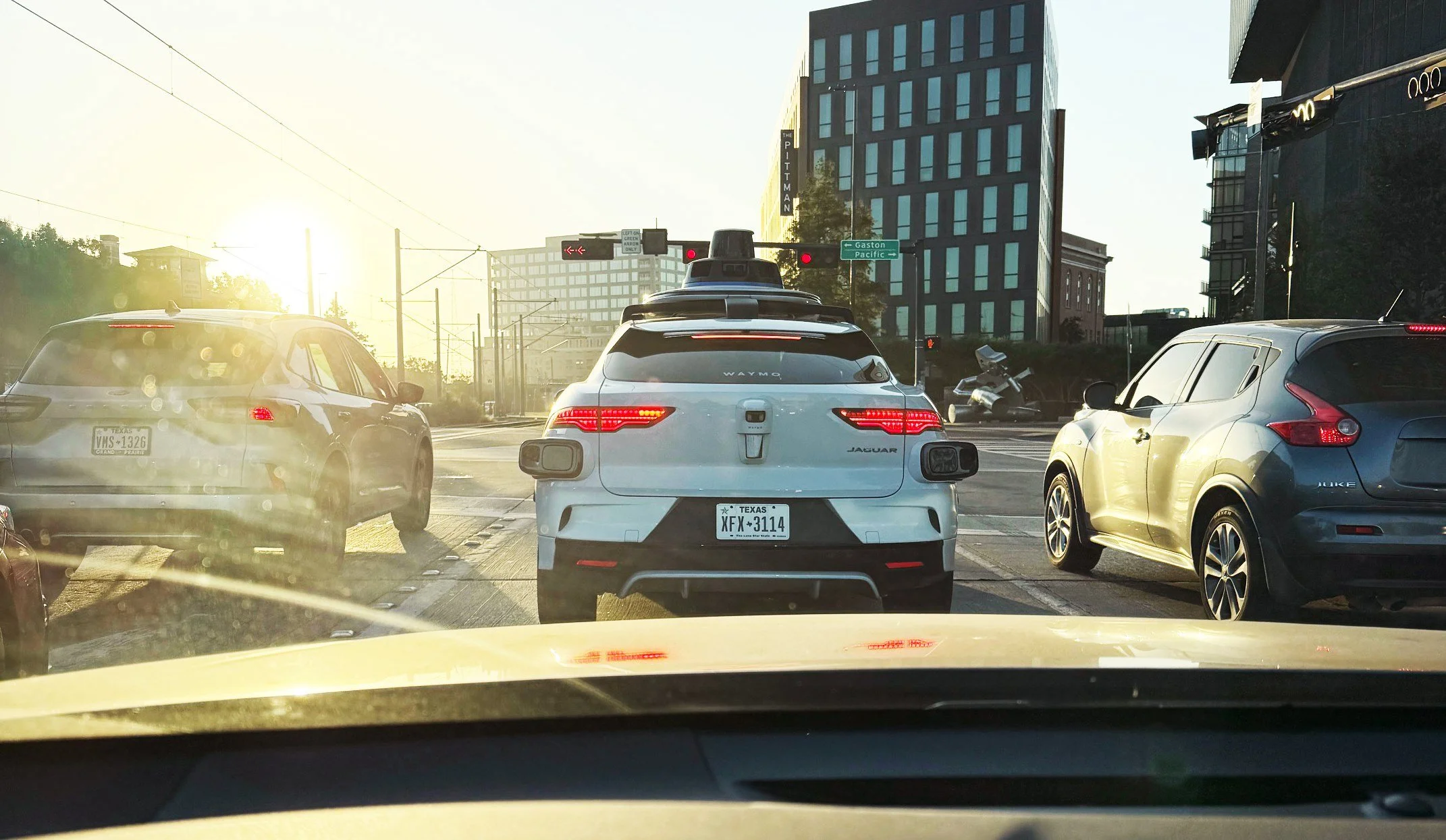
My parents picked us up from the airport over the holidays, which turned into one of those practical conversations that tends to happen while you’re loading luggage into a trunk. On the road to their house, we talked about whether it would make more sense to rent a car next time, or just grab an Uber. Part of it was logistics, and part of it was timing and independence; we don’t love the idea of burdening anyone, especially when we sometimes fly in at inconvenient hours. I’ll admit, I also still had PTSD from a recent holiday rental car experience. Despite prepaying, the car somehow didn’t exist when I arrived. Since that time, I’ve been hesitant to rent a car during busy holiday seasons.
As the conversation continued, my dad (who’s always been into tech, is curious about how things work, and also eager to be the first to try something new) mentioned that one day, he’d love to have a self-driving car. Not because it’s flashy or futuristic, but because he’s aware that there may come a time when he won’t want to drive anymore. It was an observation about aging, independence, and what technology might make easier down the road.
Since I have an average commute of two-plus hours a day (thank goodness for podcasts!), there are definitely moments where I catch myself thinking, wouldn’t it be nice if my car just drove itself to work?
That future is no longer theoretical.
I was reminded of that recently as I spotted a Waymo autonomous vehicle in Deep Ellum, right by my office. I passed it, and did a double take as I noticed there was a driver inside.
It turns out Waymo is still doing a soft launch with training runs in Dallas before officially unleashing cars here, which is currently expected sometime early this year.
Waymo has already announced plans to expand freeway access in cities like San Francisco, Phoenix, and Los Angeles, and they’re becoming increasingly commonplace in the nearby city of Austin. There have a been a few recent stories about the vehicles going rogue, including ignoring rules for school buses and driving the wrong way down city streets, so I’m not sure how I’ll feel about having a bunch of robo-taxis zipping around Dallas. On the other hand, considering some of the wild drivers I encounter daily, maybe this is an upgrade.
I decided to dig into the topic a bit deeper to get a better understanding of self-driving tech and the implications for society. I found a few podcasts that stood out, each exploring a different layer of the story: the technology behind Waymo and how it actually works, the early days of marketing and trust-building, and the human side of change.

Podcast: Google DeepMind – Waymo: The Future of Autonomous Driving with Vincent Vanhoucke
This episode breaks down the tech stack behind the cars, including the fancy bells and whistles like the multi-sensor system (lidar, radar, and a 360-degree camera array). It also gets into how Waymo approaches training the cars in new environments (especially challenges like snow, which forces them to retrain the models to understand the world when the ground looks completely different.) One surprising detail: it has taken nearly 30 years to get to where the tech is today. Way back in July 1995, the first long-distance autonomous road trip across the U.S. took place as part of the “No Hands Across America” project. Read more about the trip here.
Podcast: The Journal - How Waymo Won Over San Francisco
San Francisco was understandably skeptical when robotaxis first appeared, and Waymo had a perception problem to solve before it could scale its operations. Instead of relying solely on press releases or demos, they used guerrilla marketing tactics, like handing out fortune cookies with robotaxi facts, to introduce the concept in a friendly way.
That example immediately brought to mind a number of website and app projects I’ve worked on over the years. Sometimes, the hardest part isn’t building the thing, it’s introducing something new that depends on human behavior. Marketers are often the messengers for change. We can shape the story, test the language, and design the experience to guide people toward a certain action. But there’s never a guarantee that behavior will follow. People bring their own assumptions, habits, and skepticism with them. All we can really do is meet them where they are, reduce friction, and earn trust one interaction at a time.
Podcast: Dan Heath - What It’s Like to Be…a London Cabbie
It’s important to look at all angles of how humans are affected by new technology. While this podcast isn’t specifically tech-focused, it features a London cab driver who talks about “The Knowledge,” the legendary test requiring cabbies to memorize thousands of streets and the fastest routes across the entire city. It can take three to four years of intense study. After investing so much time, most drivers make it their career. The episode highlights how things are changing. Fewer young people are entering the profession, and even the riders themselves have changed, often glued to their phones and uninterested in small talk. It’s a reminder that innovation doesn’t just transform technology, it reshapes culture and identity.
As autonomous tech moves forward, it’s interesting to watch the ripple effect on cities, workers, and everyday habits. The self-driving cars are here to stay, so as a society we must decide how to live alongside them. How much we trust them, where we put guardrails in place, and how we maintain the human experience.