There’s a song and there’s a place
I just got back from a trip to Utah for my niece’s medical school graduation, and by the time I got home, I realized I’d been noticing the same theme all weekend.
As we were wrapping up work before I left, my coworker Jenn suggested I bring a good book for the trip. Since I knew I’d have time to read while traveling, I packed The Power of Moments, a personal favorite I’ve read a couple of times. I was already thinking ahead to my next blog article and wanted to revisit some of the book’s ideas. It ended up being the perfect choice because its themes kept showing up throughout the weekend in ways I hadn’t expected.
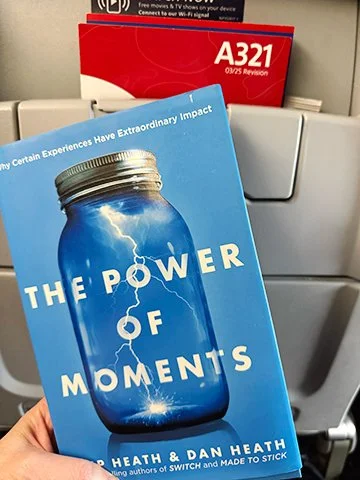
A reread of The Power of Moments turned out to be the perfect book to bring along for this trip.
That is one of the things I like most about rereading books. A book that hit one way a few years ago can feel more practical or revealing when you return to it later with more life behind you.
My niece told us they’d had snow the week before, “just in time for your visit,” she said, so the mountain peaks were still dusted with white when we arrived. It was a beautiful setting for such a major milestone, and throughout the weekend I kept noticing things that brought me back to the book’s ideas about why some moments stand out while others fade quickly.
What I’ve always liked about The Power of Moments is that it doesn’t treat memorable experiences as random. It offers a practical way to think about them: how moments are shaped, how friction affects experience, how milestones can be elevated, and how a small break from the expected can make something feel distinct. More than anything, it’s about paying attention to what someone else is actually experiencing. That made this reread especially satisfying. I wasn’t just revisiting the ideas in theory. I was seeing them play out in real time.
A send-off worth noticing
One of the first examples came before we had even left Dallas. I had just settled into my seat when the pilot came over the intercom during the pre-flight announcements and shared that this would be his final flight before retirement after forty years. We would have a brief delay, he said, because the airport fire department would be giving him a water cannon salute. People looked up from their phones, smiled, and paid attention in a way they usually don’t during a routine departure. What could have felt like any other flight suddenly had a sense of occasion. It was such a clear example of one of the book’s central ideas: milestones matter, and taking the time to mark them can elevate an experience not just for the person at the center of it, but for everyone nearby too.
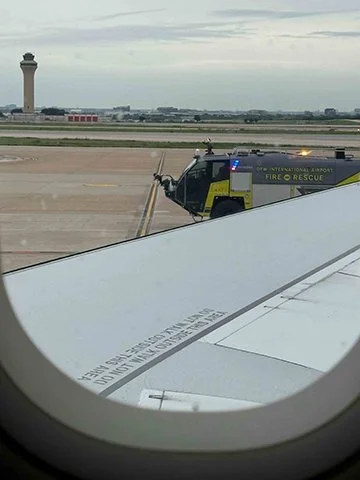
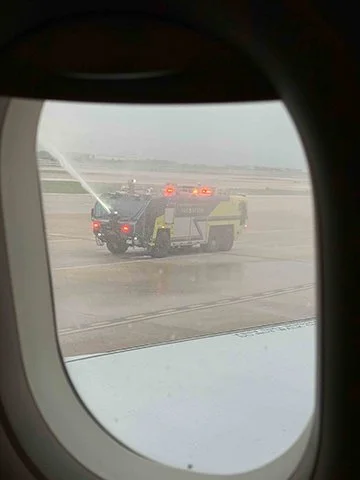
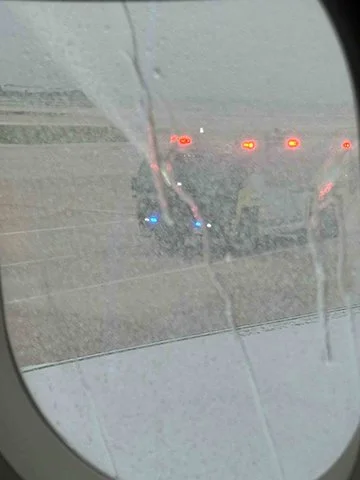
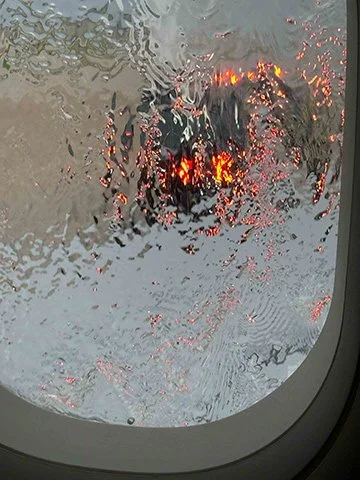
A water cannon salute for a pilot’s final flight after forty years in the air.
A weekend built around a milestone
That theme continued throughout the weekend in different ways. The graduation itself took place in Orem, surrounded by mountain views that looked almost unreal, especially with snow still resting on the peaks. Many of us had traveled from Texas to be there, and there was something moving about that alone: a big family gathering to mark the end of one long, demanding chapter and the beginning of another, as my niece now heads into residency. Graduation already carries emotional weight, but the setting, the family, and the sheer amount of work it took to reach that moment made it feel even more significant.
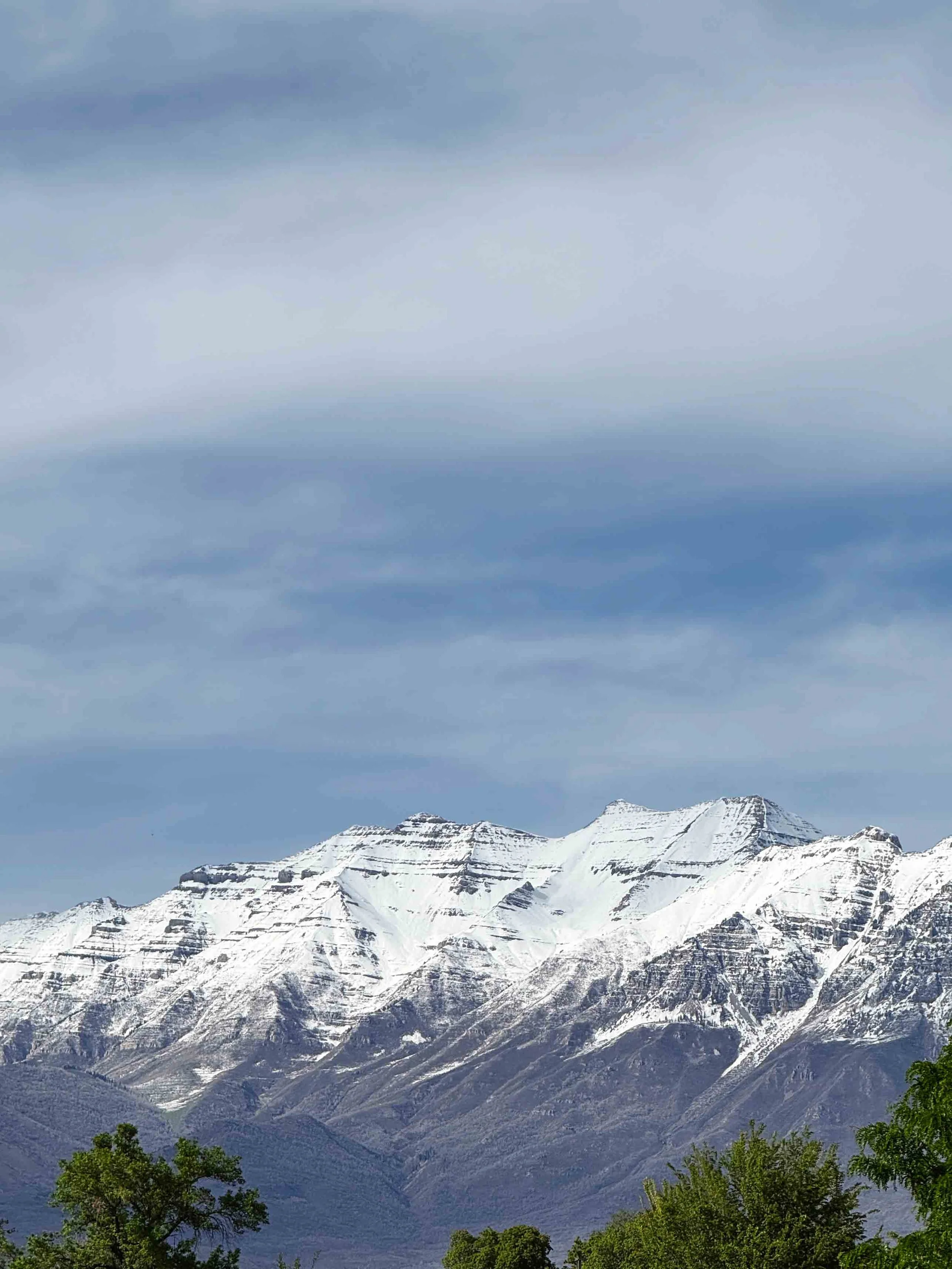
The kind of backdrop that makes a major milestone feel even more significant.
Joe’s cafe
Smaller moments during the trip reinforced the same idea. My brother-in-law found a local lunch spot called Joe’s Cafe, and it turned into the kind of experience that was memorable because of the person behind it. Joe, the owner, came over to our table, asked what we were ordering, and quickly informed us that we were not all allowed to get the same thing. He brought out a bowl of sweet grits for us to try, insisted we have his special juice, shared a bit of his story, and showed us photos of his family. Without him, it probably would have just been a good local cafe. With him, it became the kind of place people talk about later. That is one of the book’s most useful reminders: people often remember not just the transaction, but the feeling someone created around it.
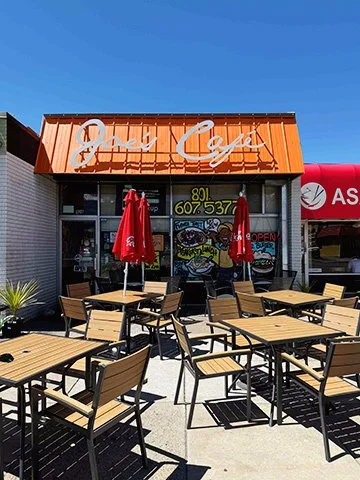
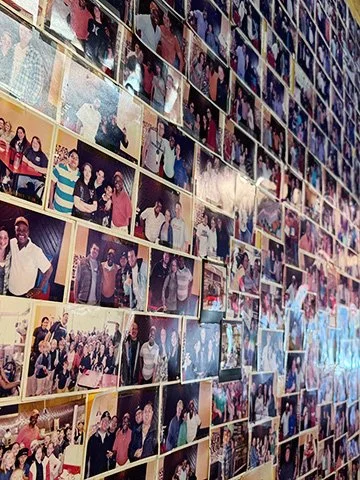
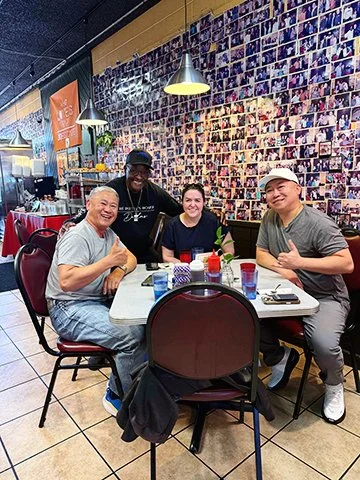
Joe’s Cafe in Orem, one of those places that becomes memorable because of the person behind it. The walls at Joe’s Cafe tell part of the story before Joe even gets to your table.
It’s all about the patient
The graduation speeches added another layer. One of the speakers, Dr. Robert Cain, shared a simple phrase: IATP. It’s all about the patient. I liked the clarity of that because it cuts through so much of what can make medicine, and honestly a lot of professions, feel impersonal. The point was simple: shift the focus from disease to patient, from process to person, and from doing the work to understanding the privilege and responsibility of caring for someone vulnerable. The Power of Moments includes several examples from healthcare, and hearing that at a medical school graduation made those sections feel especially relevant.
Another detail from the speeches caught my attention. One of the speakers, Francis Gibson, mentioned that he was a music guy and liked having a song to reflect back on, something that could represent the graduating class. He told everyone to check out IngaRose’s Celebrate Me after graduation and said, “There’s a song and there’s a place.” Later, I realized it was an AI-generated song, which made the moment even more interesting given how much I’ve been thinking and writing about AI’s role in human experience.
Another speaker, Lynsey Drew, said that being at the right place at the right time is a decision. I liked that too, partly because it pushes back on the idea that meaningful moments are purely accidental. Sometimes they do arrive unexpectedly, but often people choose to show up for them, prepare for them, or shape them for others. My niece had done that before we even arrived. Ahead of the trip, she sent us a guide to her town with recommendations and details to help those of us coming in from out of state. It was such a thoughtful gesture, and one I appreciated even more because it reflected exactly the kind of attentiveness the book talks about. Four years earlier, we had visited Utah when she was just starting medical school, and she had taken us to some of her favorite places. This time, we were revisiting some of those same spots at the end of that journey, which gave the weekend an added sense of closure.
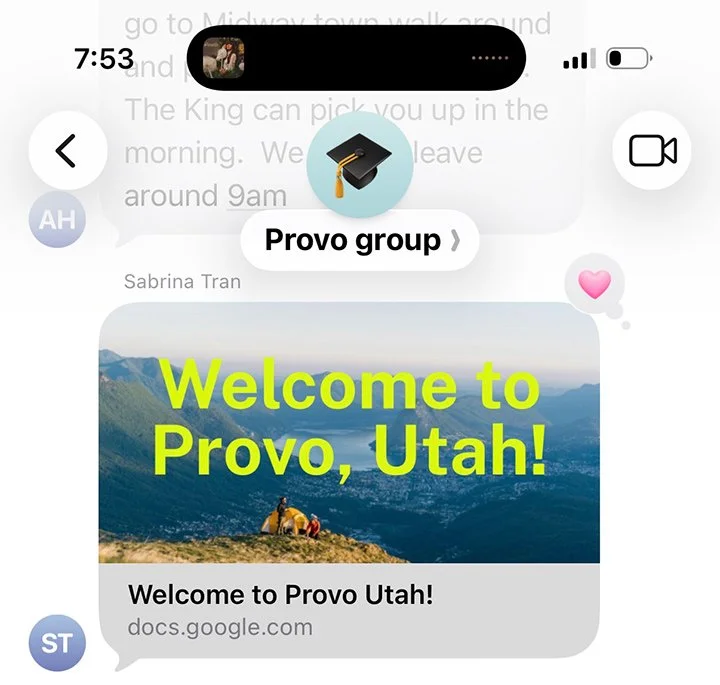
Before we arrived, my niece sent us a guide to Provo; such a thoughtful way to welcome family coming in from out of town.
I was also struck by a smaller detail from the school itself: the mascot, a gnome. It is not what most people would expect from a medical school. From what I read, it started as a playful way to help the school stand out, but it evolved into a symbol of inclusiveness and the idea that there is no single stereotype for what a future doctor should look like. A choice that could have felt gimmicky instead became memorable because it carried a real message about belonging and individuality.
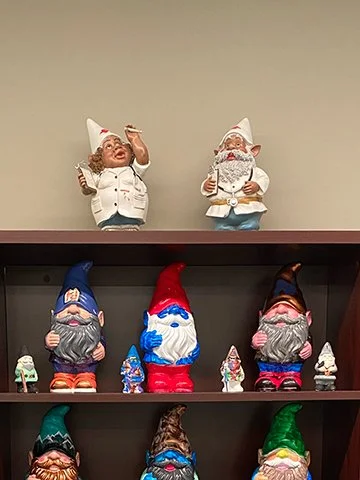
The Noorda gnomes, an unexpected mascot choice that says a lot about the school’s personality.
Travel friction
Of course, the trip also offered reminders of the opposite side of experience design. Travel is one of the easiest places to notice friction because so many systems overlap, and when one part starts to wobble, the whole experience can become more stressful than it needs to be. Before we even got to the airport, there were gate changes. At the rental car counter, I tried using the app to save time, only to get stuck almost immediately on the first screen. The employee helping me forgot to hand back my ID, which I did not realize until I was already at the car, juggling my bag and trying to figure out why the vehicle in the space did not match the one we had been told to find. Then I discovered the seat had been pushed so far forward that I could barely get into the car, and in the middle of fumbling with that, I realized my ID was missing and had to run back inside. None of it was catastrophic, and it easily could have been worse.
That part of the trip also made me think about the larger context of travel right now. Airports are emotionally loaded places because they bring together people headed in every possible direction and for every possible reason. Some are on their way to a graduation or wedding, others to a funeral, a family emergency, a long-awaited vacation, or simply home. When the system works, it can make all of that movement feel routine. When it breaks down, even in small ways, the stress can escalate quickly because so much more is riding on the journey than logistics alone. This trip happened during a particularly chaotic moment in air travel, including the collapse of Spirit Airlines, which immediately affected employees, passengers, and countless plans. I had also been thinking about how quickly travel disruption can ripple outward, whether from weather, staffing, technology, or government slowdowns. It does not take much for a fragile system to start producing domino effects. And yet even there, the contrast between friction and thoughtful care becomes visible. I saw one story about a retiring Spirit pilot who missed his final flight because of the shutdown, and how another airline coordinated a proper water cannon salute for him. It reminded me again that even when systems are strained, there are still opportunities to create dignity, recognition, and moments people will remember.
Thoughtful design
On the way home, I found myself thinking about the other side of all this. The design of the Salt Lake City airport stood out to me immediately. It felt airy, open, and unexpectedly calm, with enough light and visual clarity that moving through it seemed almost effortless. After a full weekend of ceremonies, family logistics, and travel, that kind of seamlessness had its own effect, setting the tone for the trip back. Even the TSA line felt efficient, and one of the agents was giving the usual instructions about removing large electronics from bags while casually adding things like air fryers and toaster ovens to the list, as if people were regularly bringing kitchen appliances through security. It broke up the script of a familiar process and turned a forgettable interaction into something people actually noticed. The book talks about the design of physical spaces and systems, and how much they influence the way people feel inside an experience. That airport felt like a good example of how thoughtful design can reduce friction and subtly improve a moment.
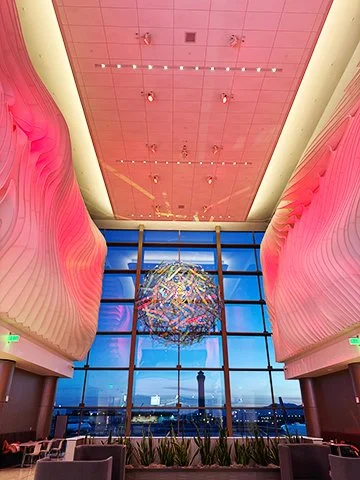

From the openness of the space to the view beyond it, the Salt Lake City airport made the trip home feel a little easier.
What I kept coming back to, both from the trip and from rereading The Power of Moments, is how practical the book really is. Its ideas are not limited to one profession or one kind of experience. They apply to doctors, teachers, designers, hospitality workers, project teams, and really anyone whose work affects other people. Over the course of the weekend, I saw those ideas play out in airports, restaurants, speeches, school traditions, and small personal gestures. In a world increasingly shaped by speed, automation, and efficiency, that felt especially relevant. Those things have their place, and I spend a lot of time thinking about them in the context of websites, apps, client work, and AI. But memorable experiences are rarely created by efficiency alone. They come from attention, from understanding what people are feeling, and from recognizing when a moment has the potential to mean more.
As with most trips, a lot of the logistics will fade. I probably will not remember every gate change, every schedule detail, or every step in getting from one place to another. What I will remember are the moments that rose above all of that: the pilot’s send-off at DFW, the mountain peaks around Provo, lunch at Joe’s Cafe, my niece sending us her town guide, the lines from the graduation speakers, and the feeling of being there with family as she reached this milestone after years of hard work. In a fast-moving world, the moments people remember are often the ones someone took the time to shape.